Series 2026Company cards, issued with rules
Every card carries its own rules.
Arus prints the limit, the purpose and the end date into each card you hand your team. Every payment lands in one ledger, with its receipt attached.
Example product · Not a bank · Sample figures throughout
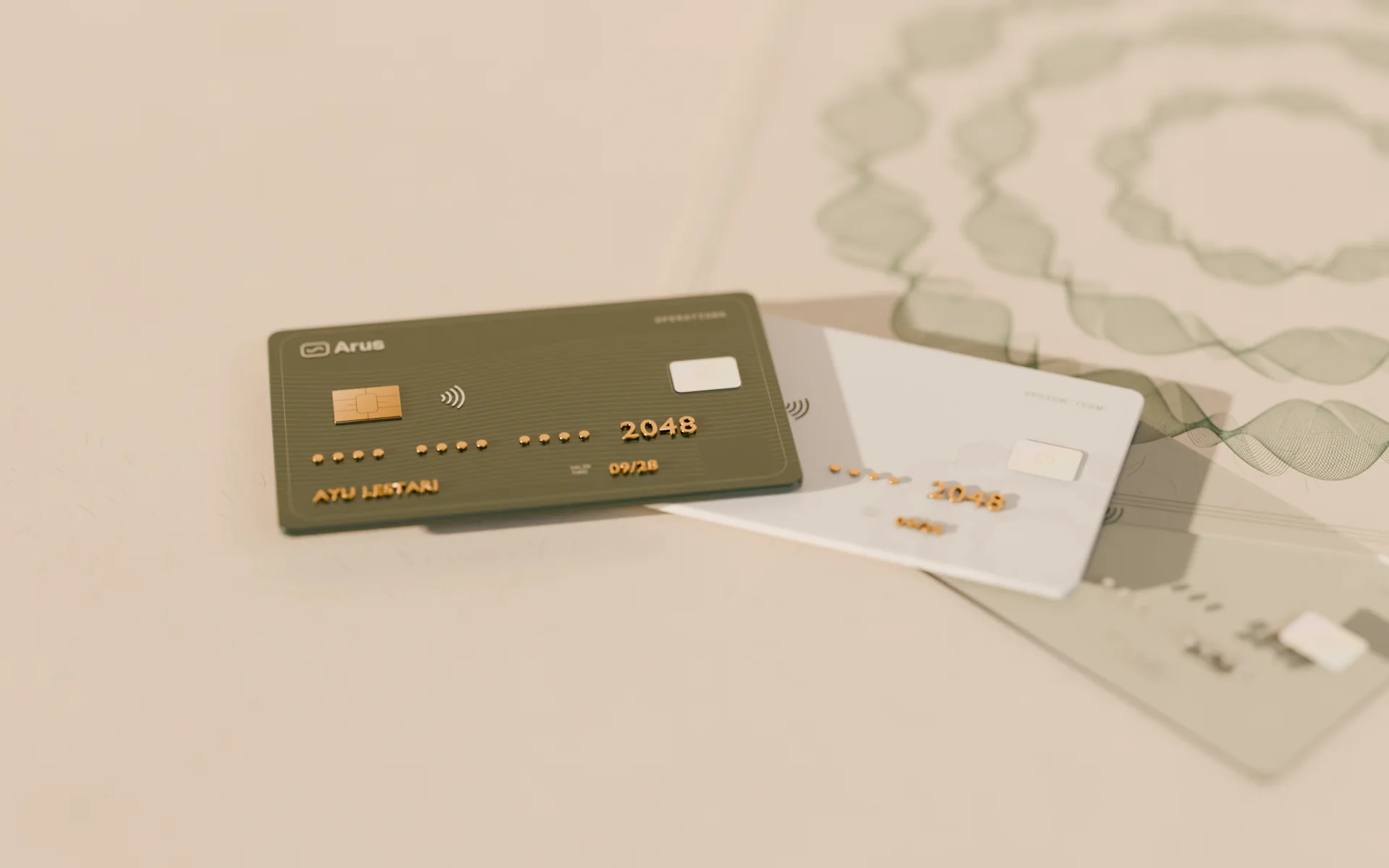
No. I · The cards
One deck, dealt to the team.
- Plate IIOne deck. Every card starts in a deck the company owns, not the person who signed up first.
- Plate IIIDealt. Each card goes to one person with one job, and carries that job printed on its face.
- Plate IVThree cards, three sets of rules. The limits differ card by card. The ledger still reads as one book.
- Ink
- Operations · $2,000 a month
- Pearl
- Design team · $800 a month
- Clear
- Travel · ends 30 Nov

No. II · Form AR-2
Fill it in. The press does the rest.
Type a name, choose the stock and set its rules. The card is struck with the name in gold and slides out of the press. Nothing is sent anywhere.
Press ready
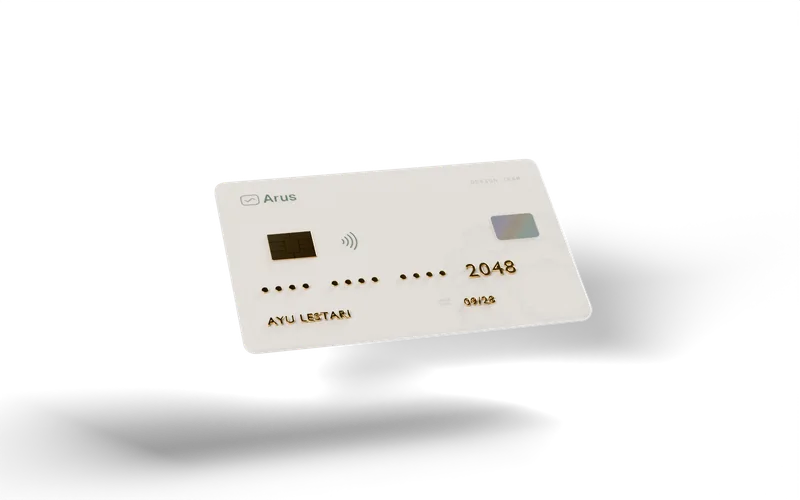
Tilt it with the pointer or the arrow keys.
No. III · The ledger
Every payment, entered as it lands.
Each card keeps its own page. A refund is a new line, never an eraser, and totals carry a double rule. All figures are sample data.
Cards this period
Sorted columns, sticky totals. Newly issued cards appear here.
No. IV · Security features
Turn it over. Four features hold it together.
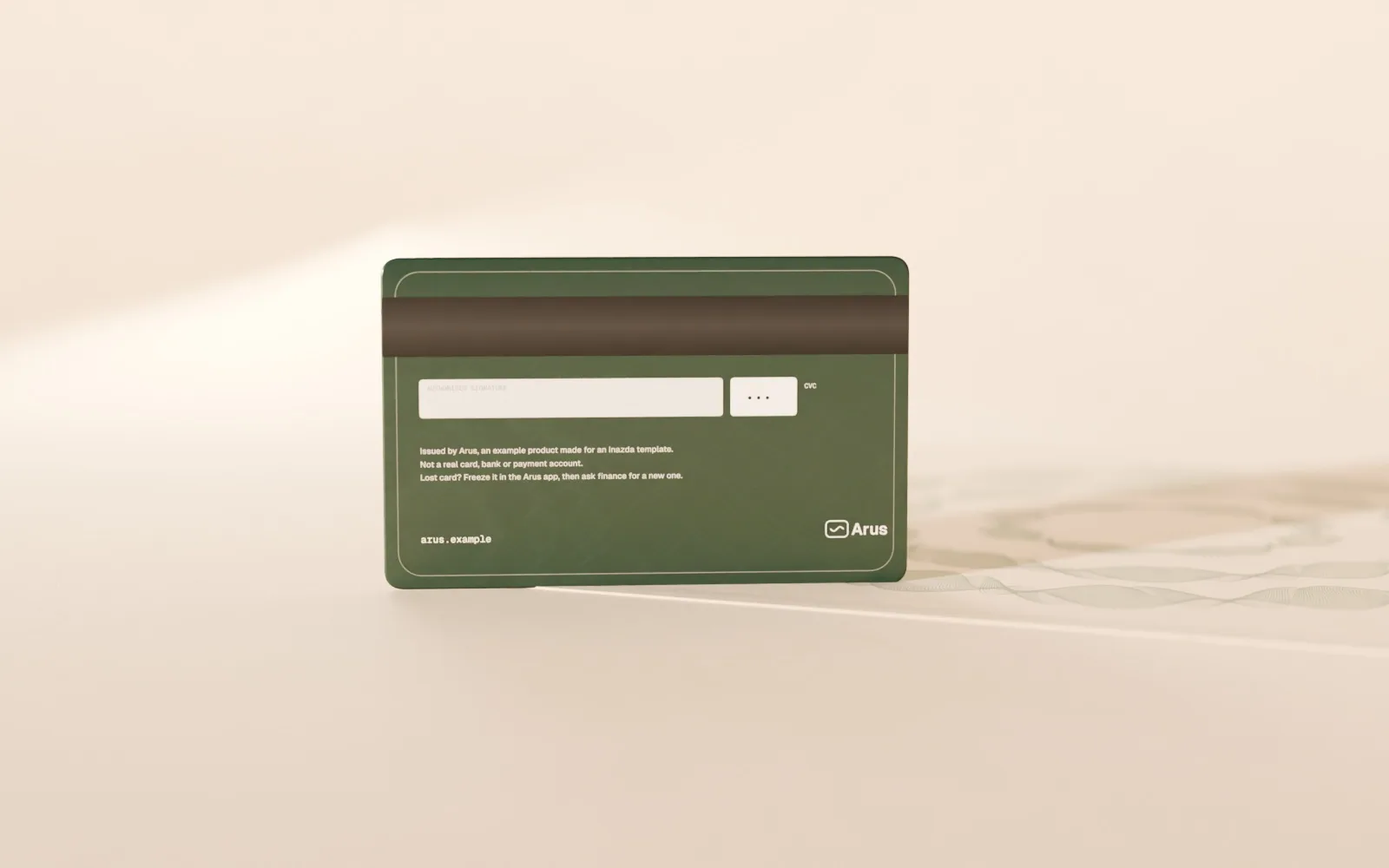
- iHidden numbers
The full card number shows only after the holder confirms it is them, and only for a minute.
- iiTwo signatures
Raising a limit above an amount you choose needs a second approver.
- iiiThe register
Who changed what, and when, written into a log you can export but nobody can edit.
- ivVoid on loss
Freeze it from your phone, then reissue a card with the same rules.
No. V · Schedule of charges
Tariff, effective 2026.
| Art. | Item | Starter | Company |
|---|---|---|---|
| 1.1 | Charge per active card | $0 | $9 a month |
| 1.2 | Cards included | up to 5 | no limit |
| 2.1 | Limits, purposes and end dates | ||
| 2.2 | Receipt capture by photo | ||
| 2.3 | One-time cards | Not included | |
| 3.1 | Two-signature approval | Not included | |
| 3.2 | Export | CSV | CSV and accounting sync |
Placeholder charges. Set your own before issue. Billed each month. Yearly billing takes two months off.
Notes and conditions
§ 1Is Arus a bank?
No. Arus is a fictional product made to show this template. In a real product, say here who issues your cards and who holds the funds.
§ 2What happens when a card reaches its limit?
The payment is declined and the holder sees why. They can ask for more from the app, and the request goes to whoever owns the budget.
§ 3Can a card work only once?
Yes. A one-time card cancels itself after the first payment, which suits deposits and trial sign-ups.
§ 4How are receipts matched?
Holders photograph the receipt or forward the email. It is attached to the entry, and reminders stop once it arrives.
§ 5Can I bring my own accounting tool?
Exports work everywhere as CSV. List the tools your product syncs with here.
Application stub