Every jar, bag and carton, accounted for.
Binwell runs stock for three coffee and ceramics shops. We redesigned the app so each movement has a source, counts happen at the shelf, and the month closes without a spreadsheet.
The problem
Each shop counted stock on paper once a week and typed the totals into a shared sheet. Corrections overwrote the old number, so when a total looked wrong, nobody could say why.
The owners had already bought an inventory app. Staff stopped using it after a month: receiving a delivery took a dozen steps on a small screen, and a mistake could only be fixed by an admin.
What we changed
One rule ran through the project: a number on screen always links back to the movement that made it.
- 01
Receive in one screen
A delivery is scanned or picked from the order, with expiry dates added as it's shelved.
- 02
Count at the shelf
Counts run on a phone, shelf by shelf, and show the difference before anyone saves.
- 03
Correct without erasing
A correction is a new movement with a reason. The original stays in the history.
- 04
Close the month
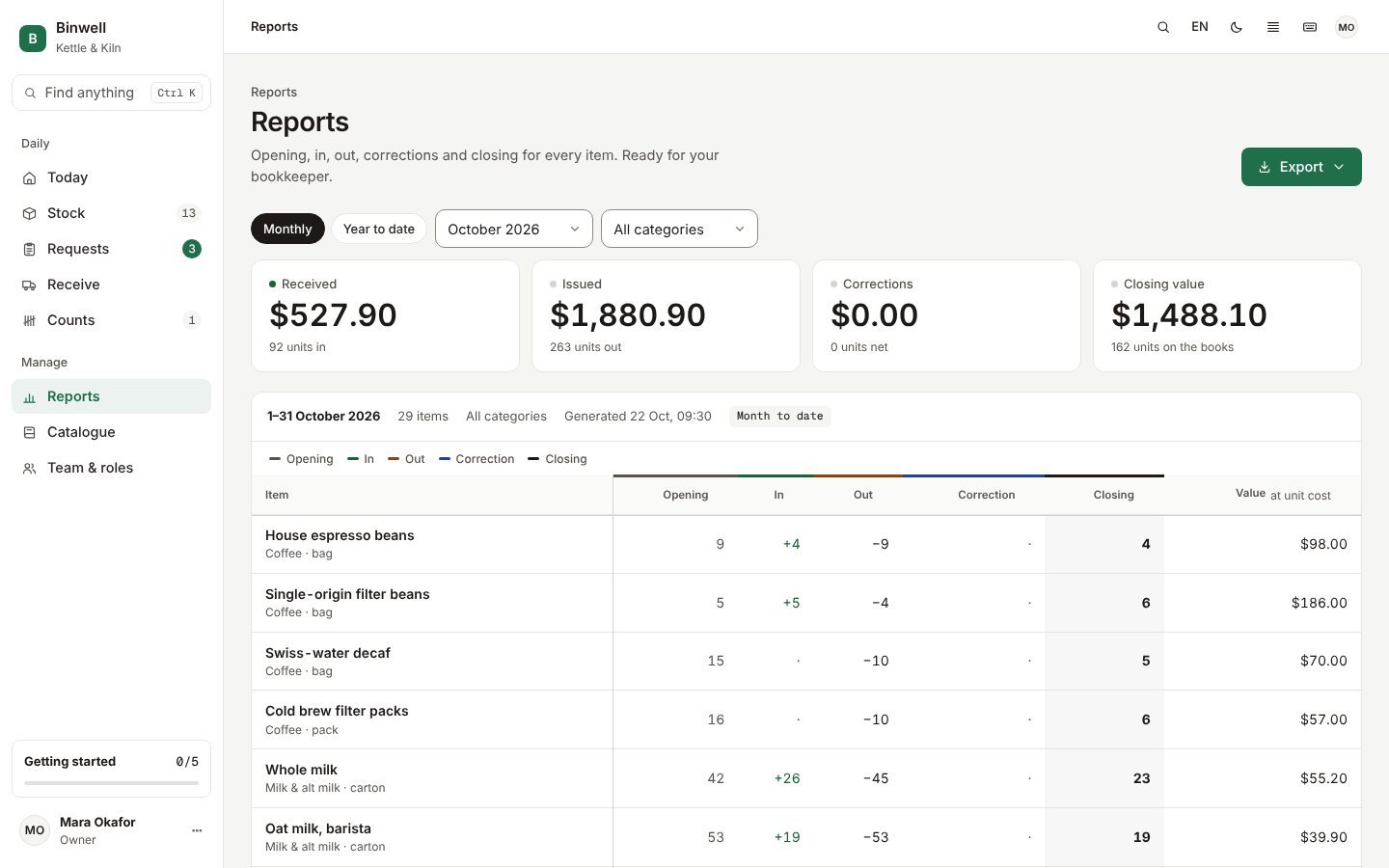
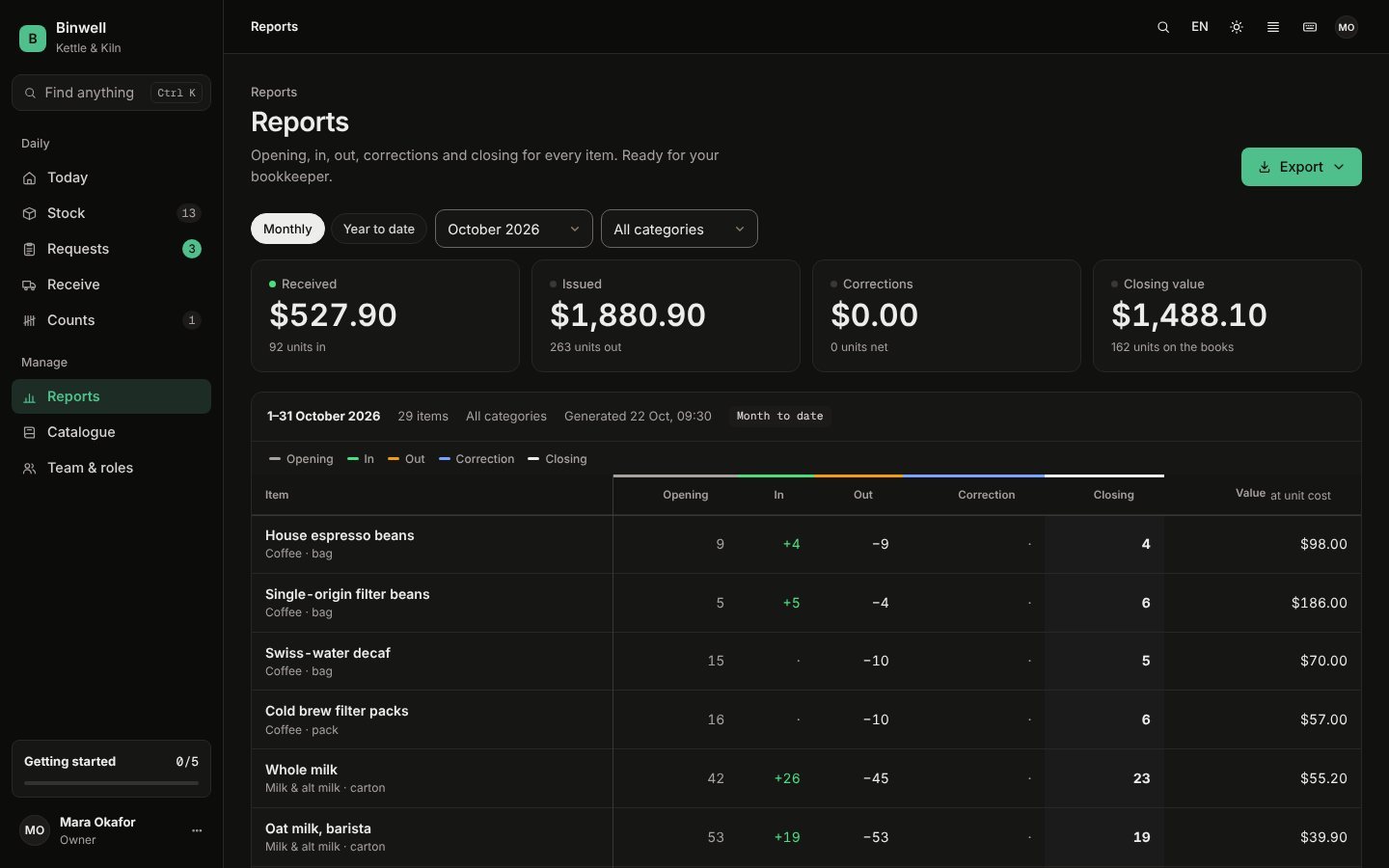
Opening, in, out, corrections and closing value, exported for the bookkeeper.
Designed with the people who count
We spent two mornings behind the counter before drawing anything. The counting flow was tested with baristas on their own phones, in a busy shop, in the third and seventh week.
Screens
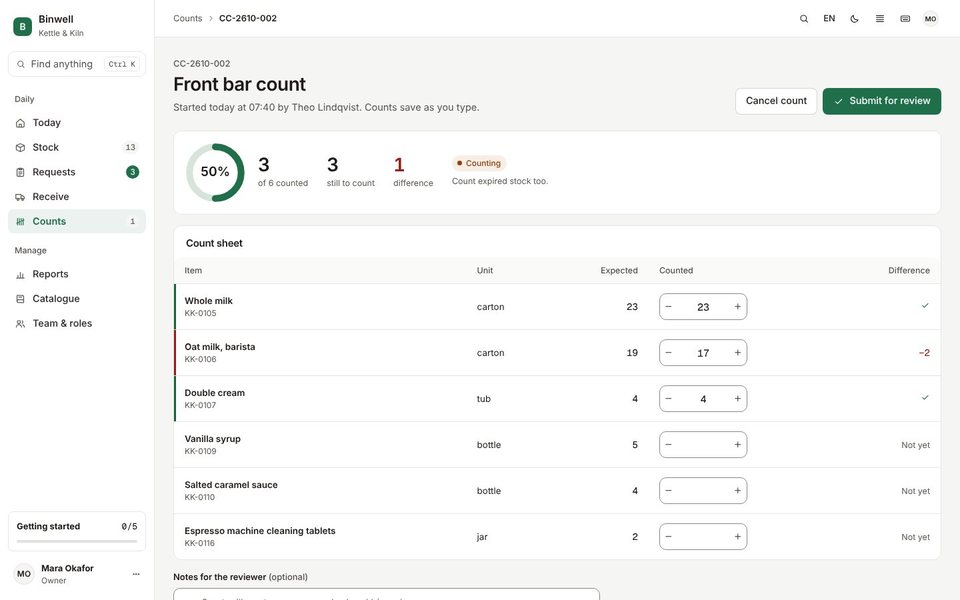
Count by shelf, not by list
The screen follows the walk through the stockroom, so nobody scrolls looking for an item.
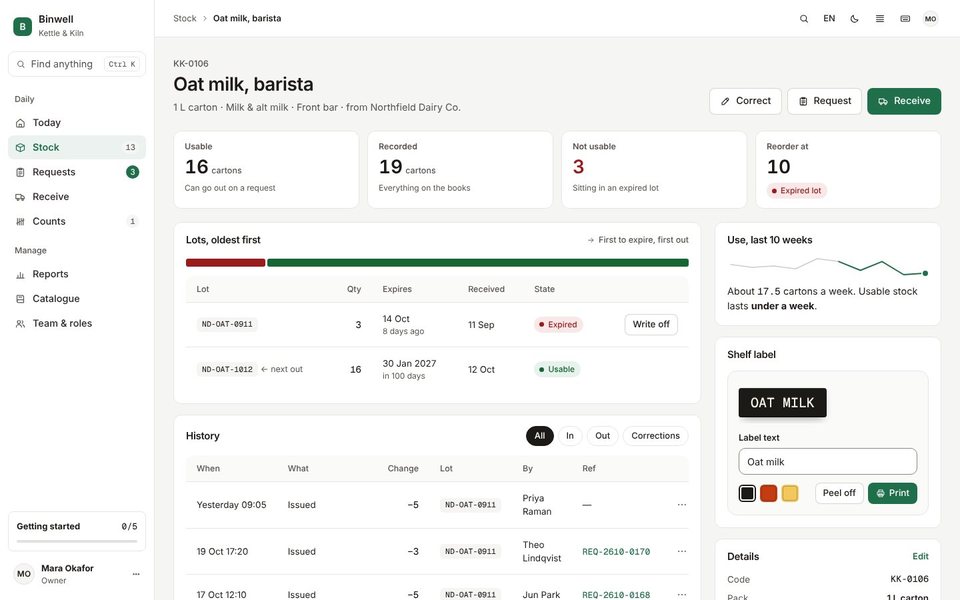
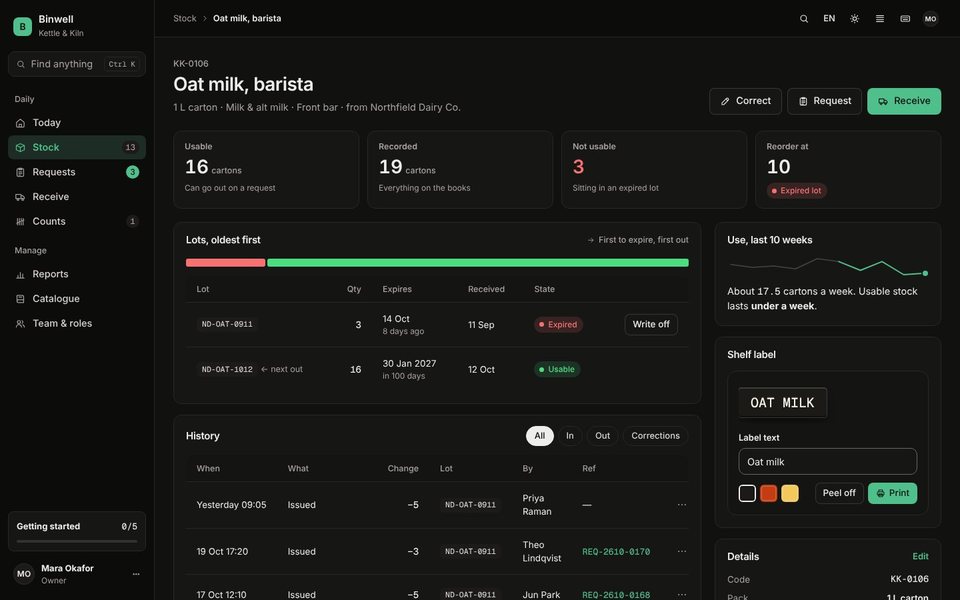
One page per item
Lots, oldest first, with the full history underneath. Expired stock stays recorded but can't be issued.
After launch
The shops count weekly on their phones and close the month from the report screen. The shared sheet was archived in the second month.
We handed over the components, tokens and a recorded walk-through. The client's developer has since added a supplier page without us.
Binwell is a fictional client. This page shows how to write up a project: what was wrong, what changed, and what happened next, without invented numbers or quotes.
Have a screen nobody likes opening?
Send a few lines about it. We reply within two working days.