Kitchen
Sample price$19per site, per month
For one kitchen, café or small cold room.
- Up to 20 points
- Two rounds a day, at any times
- Monthly export as PDF and XLSX
Bandkeep tells the team when each round is due, flags any fridge, freezer or incubator outside its band, and keeps every reading and correction ready for the auditor.


Most kitchens and labs do take temperatures. The trouble is everything between the reading and the record.
Readings are written up at the end of a shift from memory, or not at all. On paper, a blank box looks the same as a fridge nobody checked.
A dairy fridge reads 9.4 °C at two in the afternoon. The person who saw it wrote it down and moved on; the person who could act never heard.
An inspector asks for three months of logs, corrections and calibration certificates. Someone loses a day finding pages and explaining gaps.
Four steps. Set up your points and their safe bands once; after that the team only logs rounds and answers alerts.
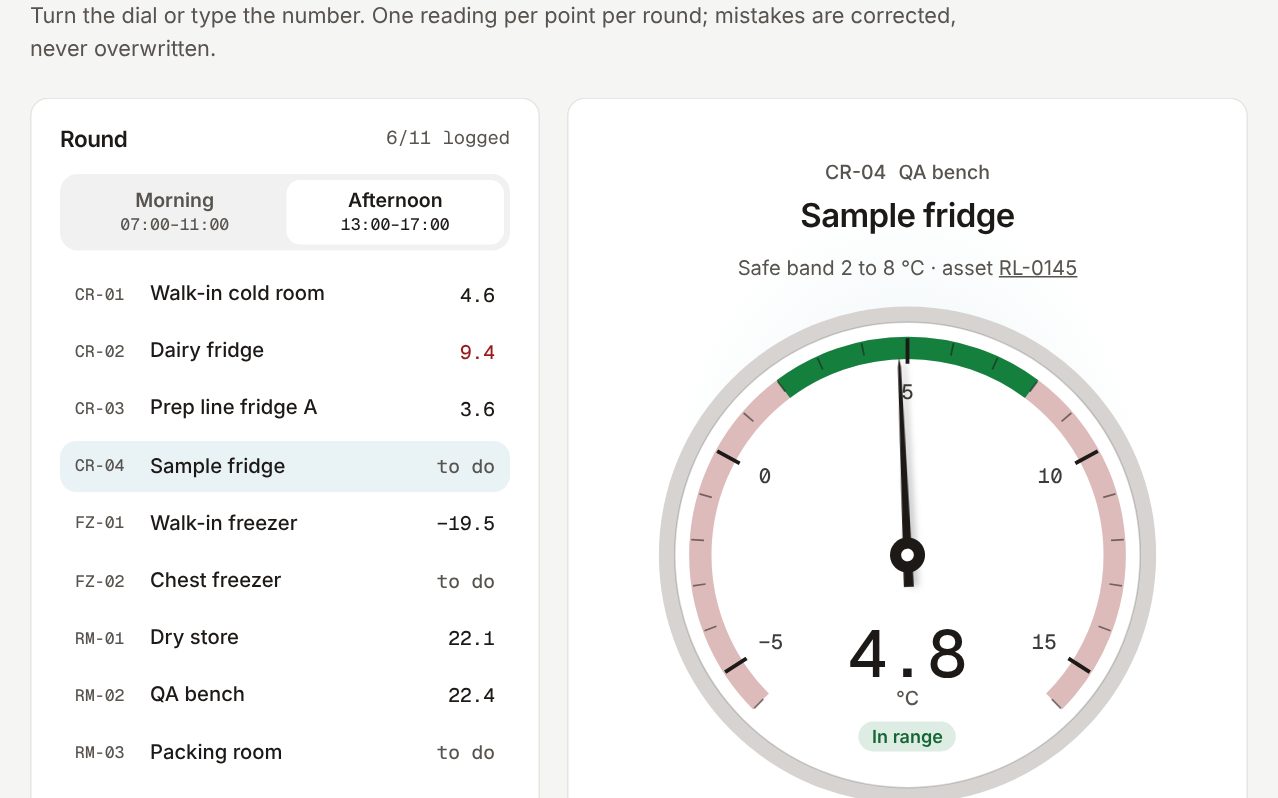
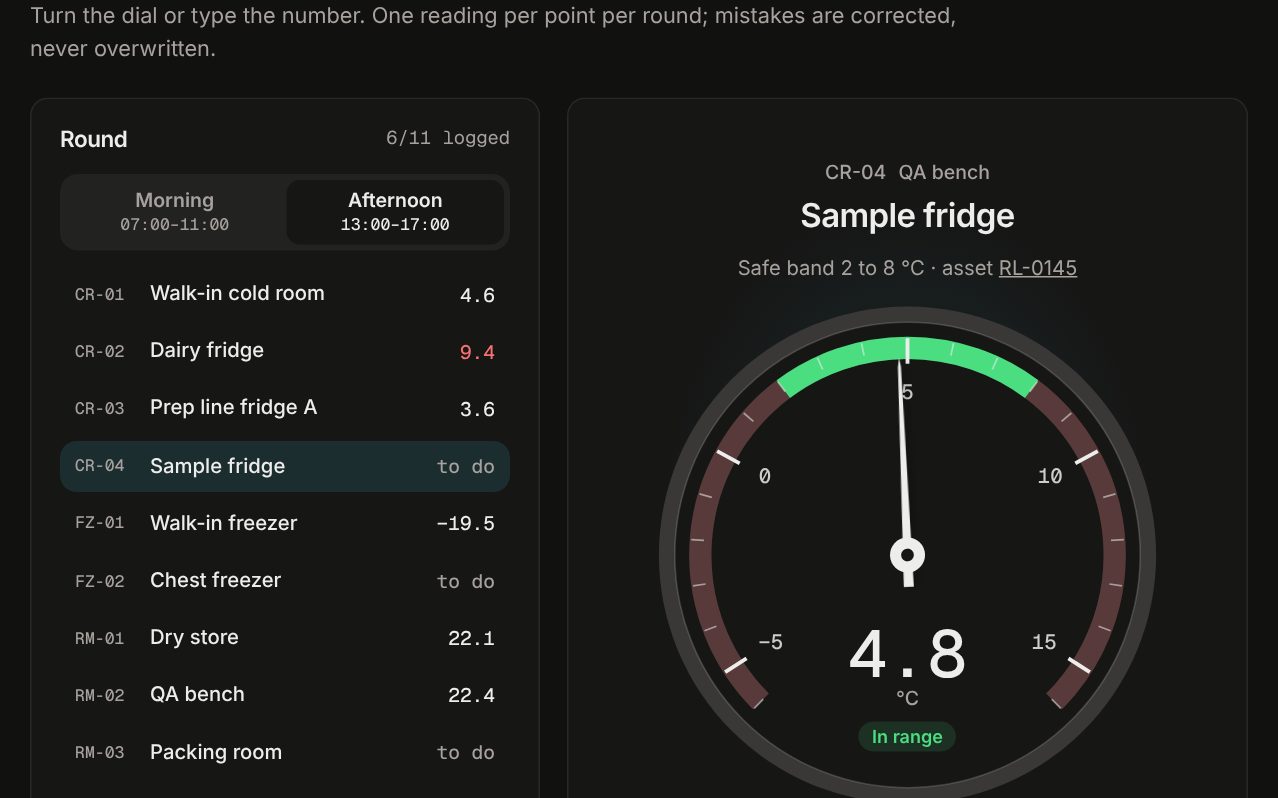
Staff turn a dial or type the number on a tablet. Every point has its own safe band, so an out-of-range reading is obvious the moment it goes in.
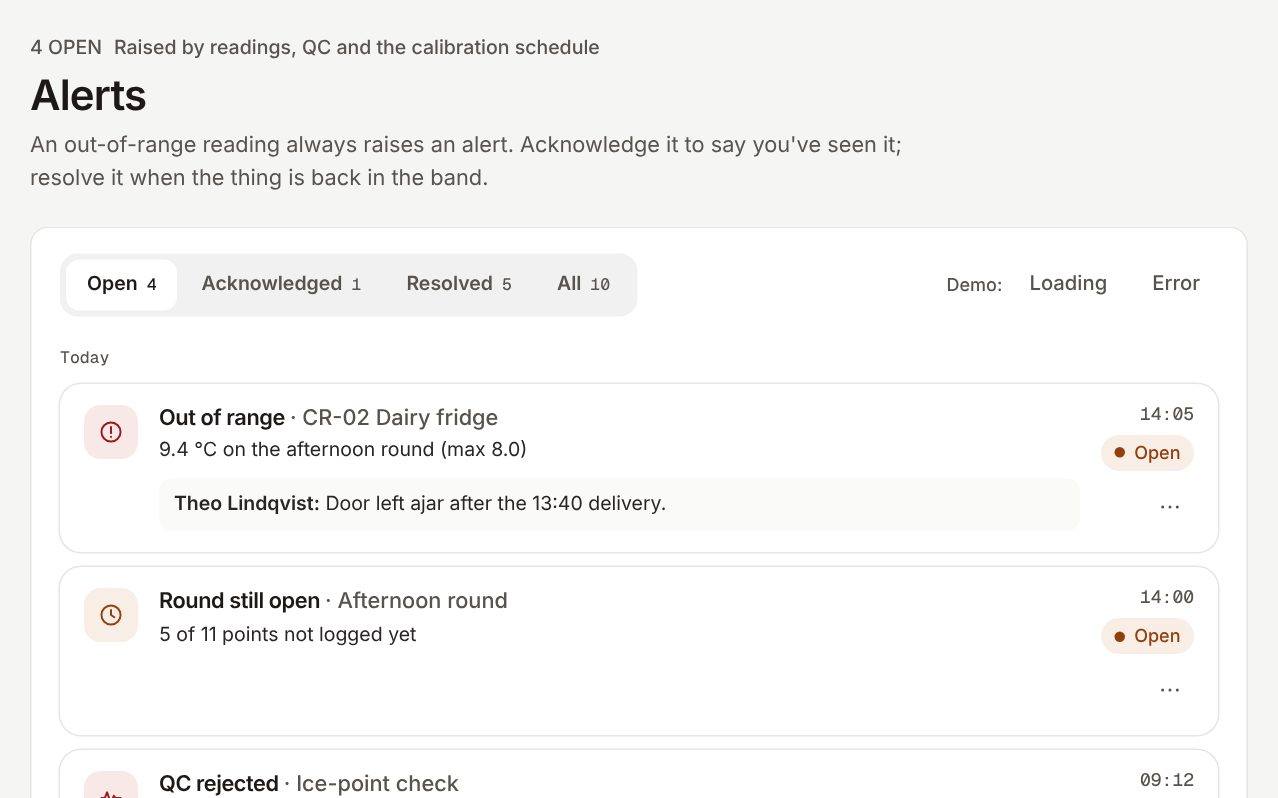
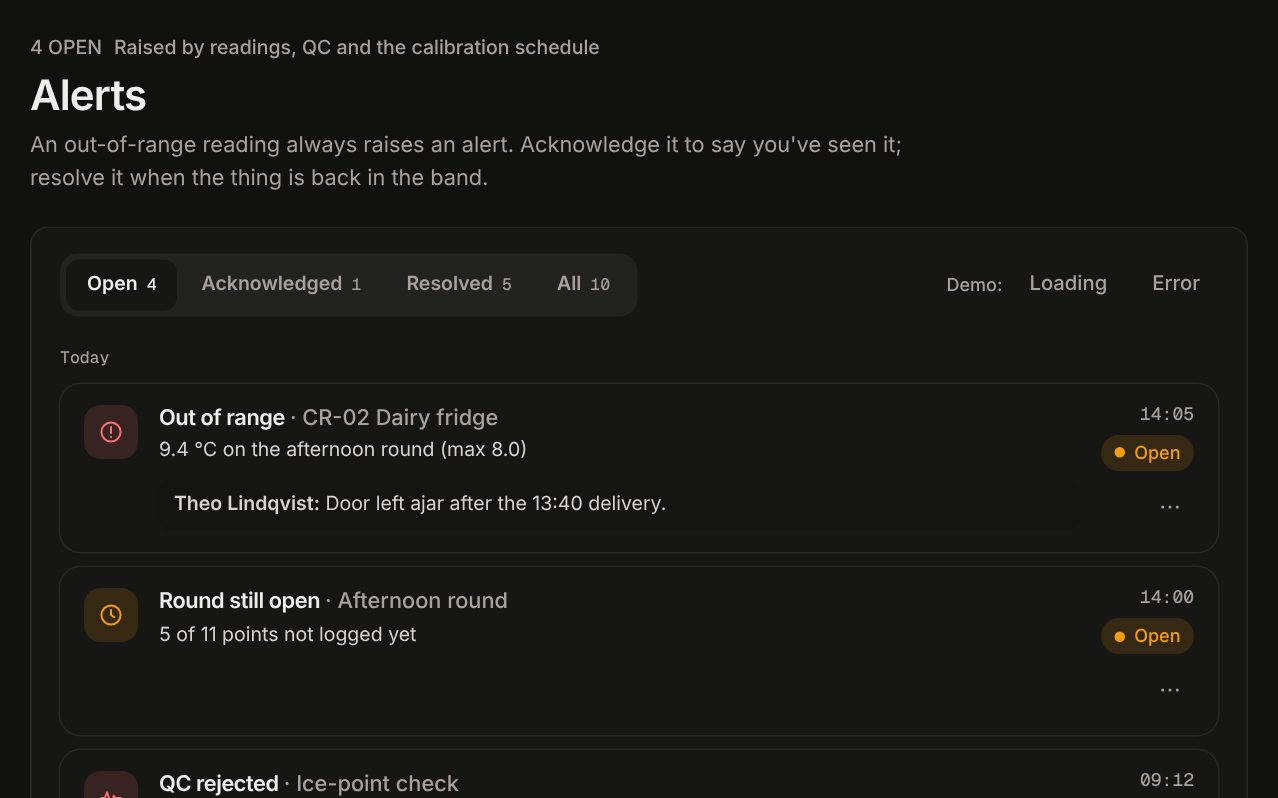
The alert stays open until someone acknowledges it and notes what they did, such as moving stock or calling for a repair.
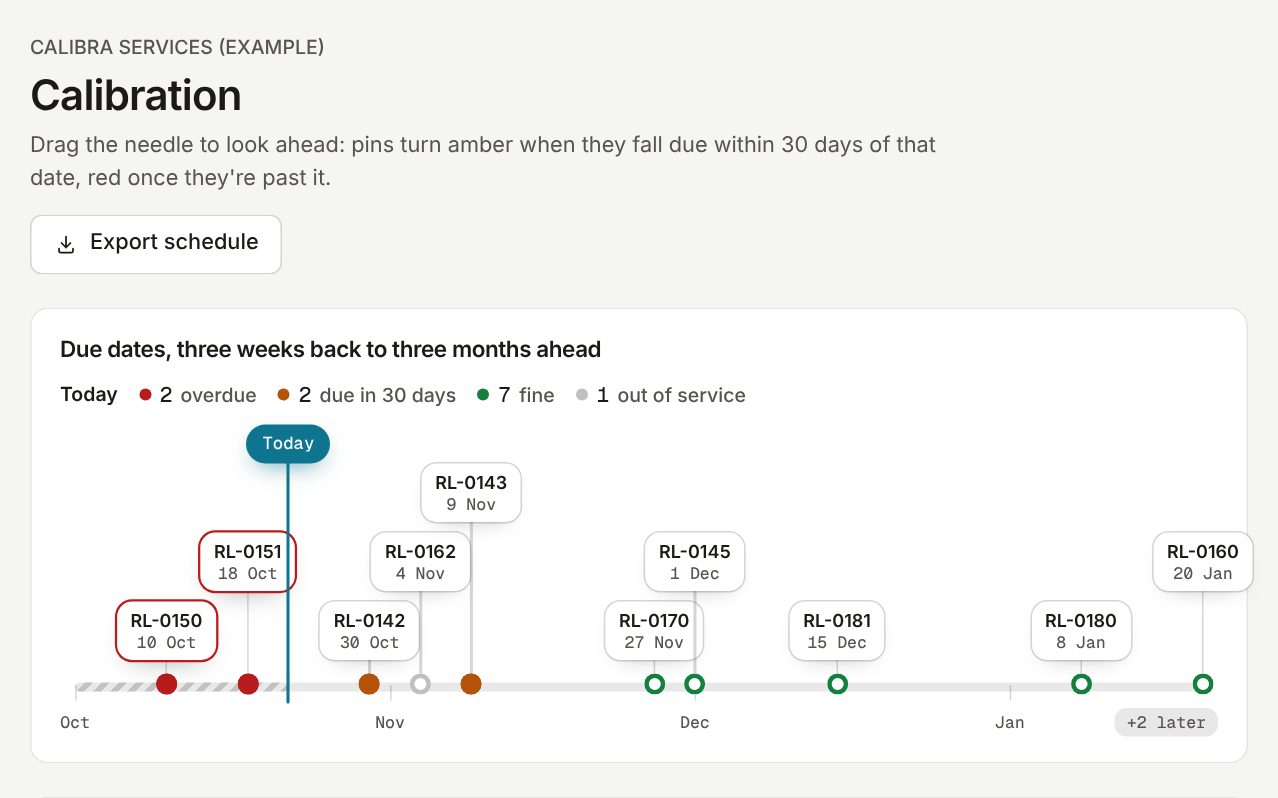
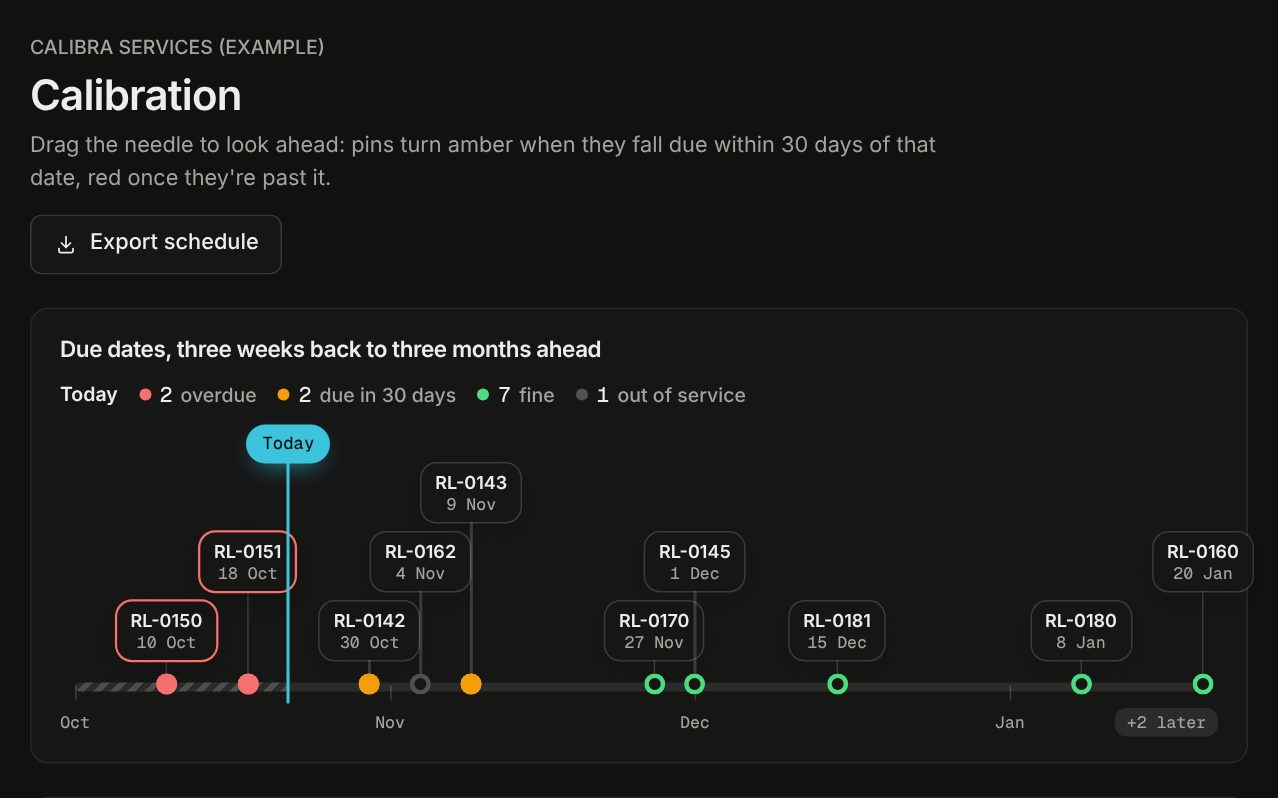
Calibration dates sit on one timeline. A probe that is overdue or failed is flagged before anyone trusts its readings.
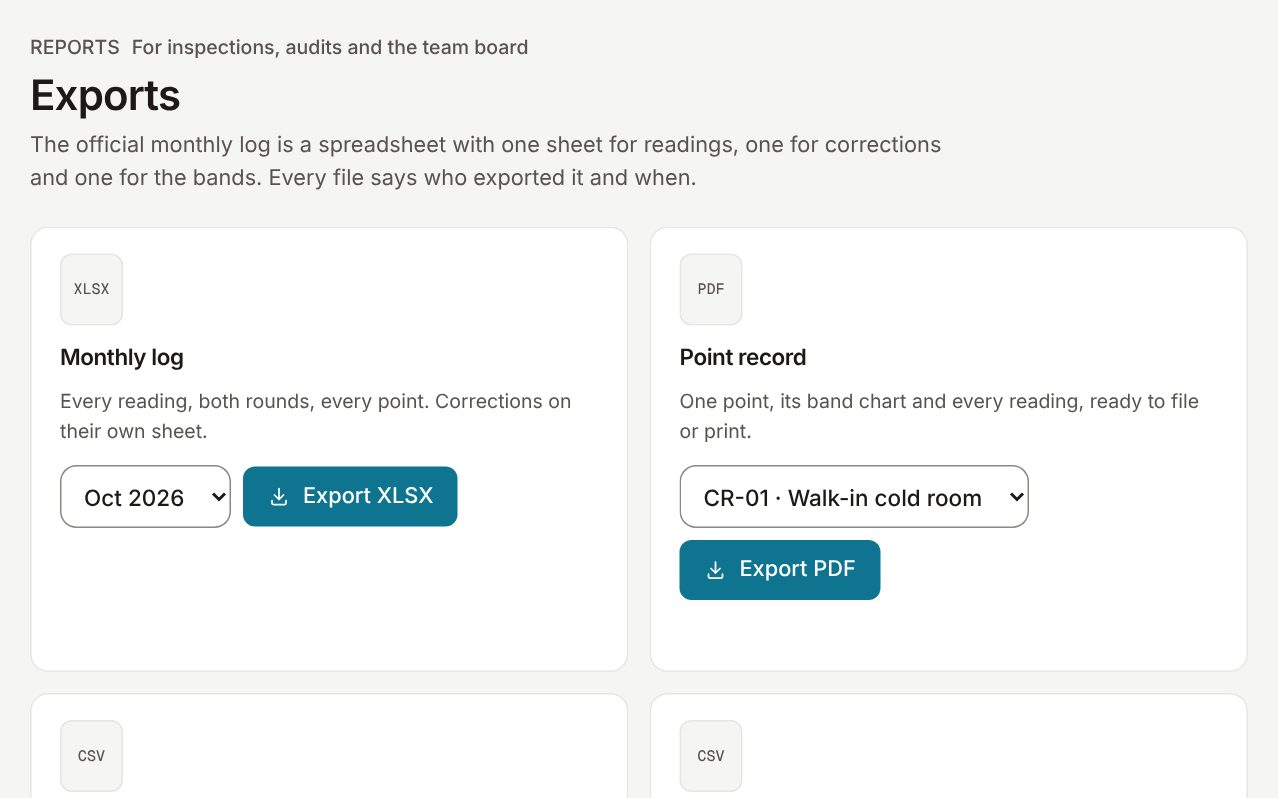
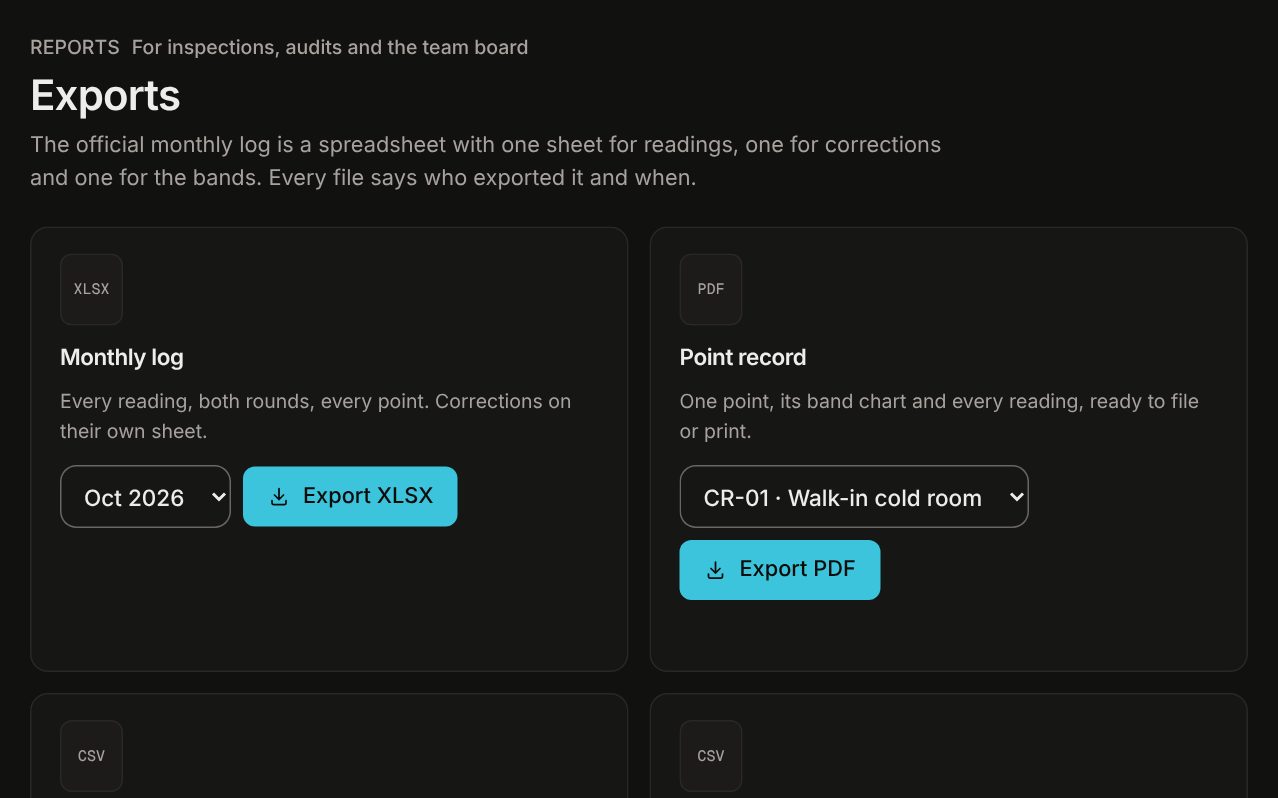
Export a month of readings, corrections and calibration records as a spreadsheet or PDF, stamped with who exported it and when.
Every plan has every feature below. Larger plans add sites and controls, not features held back.
Three common ways to keep a temperature log, compared by approach. We don't name or rate other products; this is about what each route leaves for you to do.
| Question | Paper log on a clipboard | Shared spreadsheet | Bandkeep |
|---|---|---|---|
| Shows a missed reading | Partly: At the end of the day, if someone looks | Partly: Only when someone opens the sheet | Yes: As soon as the round window closes |
| Out of range reaches someone | No: Only if the person who saw it says so | No: No | Yes: An alert with an owner and a note |
| Corrections | Partly: Crossed out by hand | No: Overwritten; the old value is gone | Yes: Kept beside the original, with a reason |
| Getting ready for an audit | No: Find the binders, explain the gaps | Partly: Export, then tidy it by hand | Yes: One export per month |
| Works with no power or Wi-Fi | Yes: Always | Partly: Offline on some devices | No: Needs a device and a connection; keep a paper backup |
| What it costs | Paper and staff time | Staff time | Per site, per month (see pricing) |
Priced per site, because that's how the work grows. Every plan includes every feature above.
$19per site, per month
For one kitchen, café or small cold room.
$39per site, per month
For labs that run QC checks and calibrate instruments.
Customagreed per contract
For several sites with one quality lead.
Sample prices for this template. Replace them before you publish. Taxes may apply.
Anything else: [email protected]
Readings are entered by people on their rounds, on a tablet or phone. If you already use wireless loggers, their exports can be imported so they sit beside the manual readings.
Bandkeep marks the reading and opens an alert. Someone acknowledges it, notes what they did, and resolves it when the point is back in its band. All of it stays in the history.
It can be corrected, never overwritten. A correction needs a reason, and the original value stays visible next to it.
Staff log readings. Supervisors review alerts and corrections. Auditors can read everything and change nothing. Admins manage points, rounds and people.
A monthly export with every reading, correction and calibration record, as XLSX or PDF, showing who exported it and when.
Yes. The trial lasts 14 days and needs no card. Set up your points, log a few rounds and export a sample month.
A 30-minute call where we set up your first points with you. You'll know by the end whether it fits, either way.